
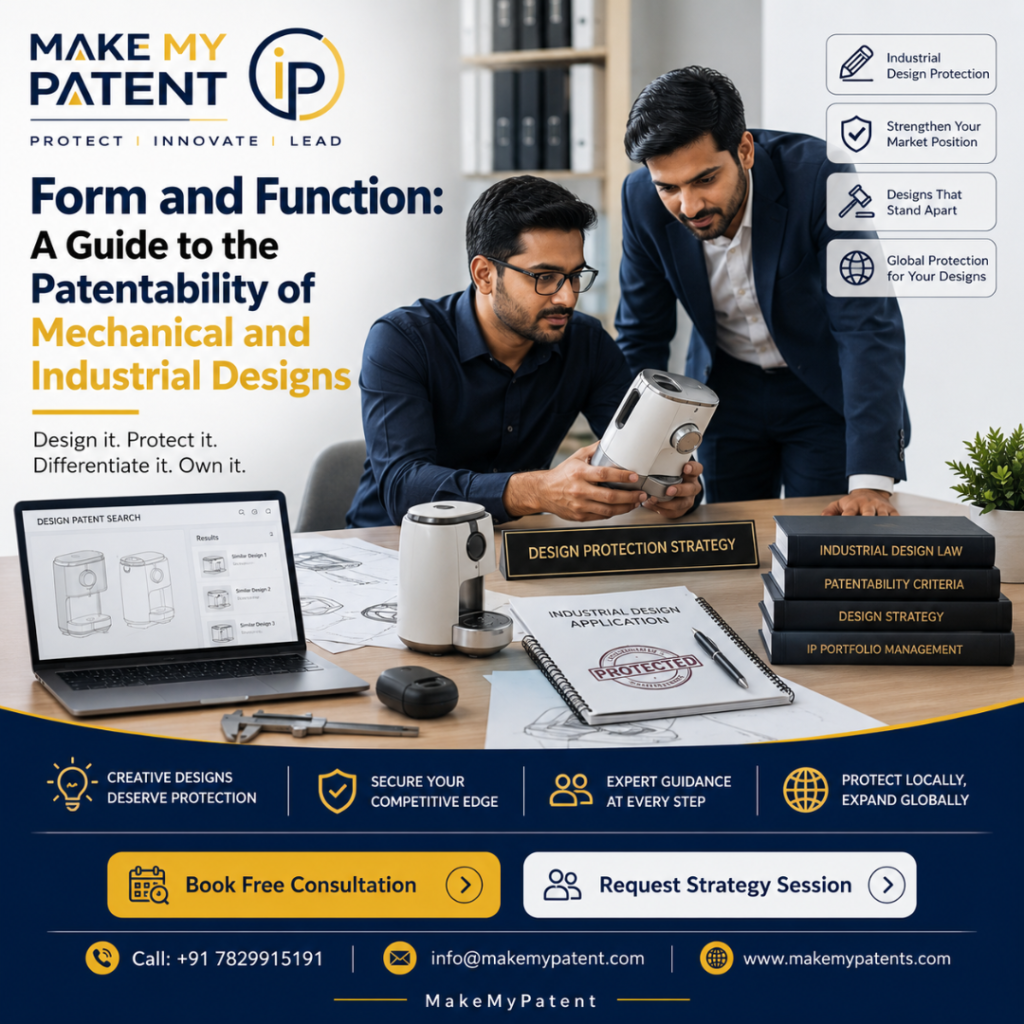
Artificial intelligence and software may dominate the headlines today, but the physical world—engineering, manufacturing, consumer products, and industrial equipment—remains the underpinning of the global economy. Hardware innovation is booming, from groundbreaking medical devices to next-generation car parts. However, for entrepreneurs and mechanical engineers, a physical product going to market carries with it a huge vulnerability: reverse engineering.
While software can be tucked away on a secure server, a physical product is out there entirely exposed the moment it hits the shops. If a competitor can buy your product, tear it apart, and reproduce its parts, your competitive edge can vanish overnight.
You need an ironclad IP strategy if you want to hold your place in the market. Here is your guide to protecting physical innovations with mechanical and industrial patents.
The Two-Pronged Strategy of Utility Patents and Design Patents
If you are talking about actual things, there are two main paths of patent protection. A smart IP portfolio means knowing the difference—and knowing exactly how to stack them.
Utility Patents (Protecting the Functionality)
A utility patent covers how an innovation operates. It is the way it works, the parts it has, the substance it is made of, or the way it is made. A mechanical utility patent requires the invention to meet three demanding standards:
- Originality: The invention must be entirely new.
- Non-Obviousness: It must not be obvious to a person versed in that particular art.
- Utility: It must have a useful application.
Example: If you create a new type of shock absorber that converts kinetic energy 20% more efficiently than existing ones, you would file a utility patent to cover the internal mechanics and structural configuration that allow for that efficiency.
Design Patents (Protecting Appearance)
A design patent protects the appearance of an invention. It covers the distinctive visual, decorative aspects of a physical object, such as its shape, configuration, or surface adornment. The main criterion here is that the design should be both innovative and non-functional. If the shape of your product is tightly dictated by the way it works, then it is not eligible to be covered by a design patent; it belongs in a utility application.
The Mixed Approach
The strongest intellectual property strategies often use both. Think about a current smartphone or a luxury car. Utility patents cover the processors and engine mechanics underneath. Design patents cover the elegant curvature of the glass screen or the unusual shape of the headlamps. Filing for both creates a double-layered “IP moat” that makes it very difficult for copycats to infringe on your goods without breaching at least one of your patents.
The Risk of Public Disclosure and “On-Sale” Bars
The number one, most prevalent, and most destructive mistake for hardware businesses is prioritizing marketing above intellectual property. You see prototypes of mechanical inventions at trade exhibits, high-profile crowdfunding campaigns on sites like Kickstarter, or pitches to distributors before the inventor even talks to a patent attorney.
This is a serious mistake.
In most nations, including the European Union and China, patent law follows the principle of “absolute novelty.” This means if you publish your innovation before you file a patent application, you immediately lose its uniqueness and forever lose the right to acquire a patent in certain nations.
The U.S. has a one-year “grace period” after your first public disclosure or offer for sale. But depending on this grace period is a risky gamble. That leaves you totally exposed throughout the rest of the world and offers well-funded competitors a full year to look at your idea, reverse engineer it, and file their own slightly altered patents.
- Best Practice: Always file a Provisional Patent Application prior to any public marketing, sales offers, trade show exposition, or open beta-testing. A provisional application sets your priority date and gives you the ability to safely claim “Patent Pending” while you test the market.
Risks to Manufacturing and Supply Chain
From the digital CAD file to practical production, there is an entirely new set of IP threats. Hardware firms have to ship their most private plans, schematics, and prototypes to third-party manufacturers, tooling companies, and assembly lines, sometimes overseas.
This creates a huge danger of IP leaking. Without the correct precautions, you may well find a factory taking your designs and running a “third shift”—making your precise product overnight and selling it out the back door to unlicensed distributors. Or, foreign parties may attempt to patent your technology in their own country first.
Your patent approach must be coupled with rigorous contractual safeguards to limit these risks:
- NNN Agreements: Use strong Non-Disclosure, Non-Use, and Non-Circumvention agreements customized to the specific regulations of the country where the manufacturing is happening.
- Strategic Regional Filing: Consider filing strategic patents in the countries in which your product is actively made (not just where it will be marketed) to provide yourself a legal foothold at the exact point of production.
Conclusion: Lock Down Your Physical IP Address
Protecting mechanical and industrial designs is a balancing act between protecting functional novelty and aesthetic originality within rigorous legal time limits. Hardware is hard, but losing your market share to a knock-off competition is far worse.
MakeMyPatents helps hardware founders and industrial designers plan out their physical product architecture safely. We are here to help you whether you need to file a complete utility patent, protect your aesthetic with a design patent, or lock in an early provisional application before your next big trade event.
🚀 Secure Your Tangible Innovations Today
Don’t let copycats reverse engineer your hard work. Call our team immediately to make sure your mechanical and industrial designs remain yours alone.
Take Action and Consult with the Experts:
- 🌐 Visit Us: Explore IP Strategies at MakeMyPatents.com
- 📞 Call Our Experts: +91 98765 43210
- ✉️ Email Us: contact@makemypatents.com