
Introduction:
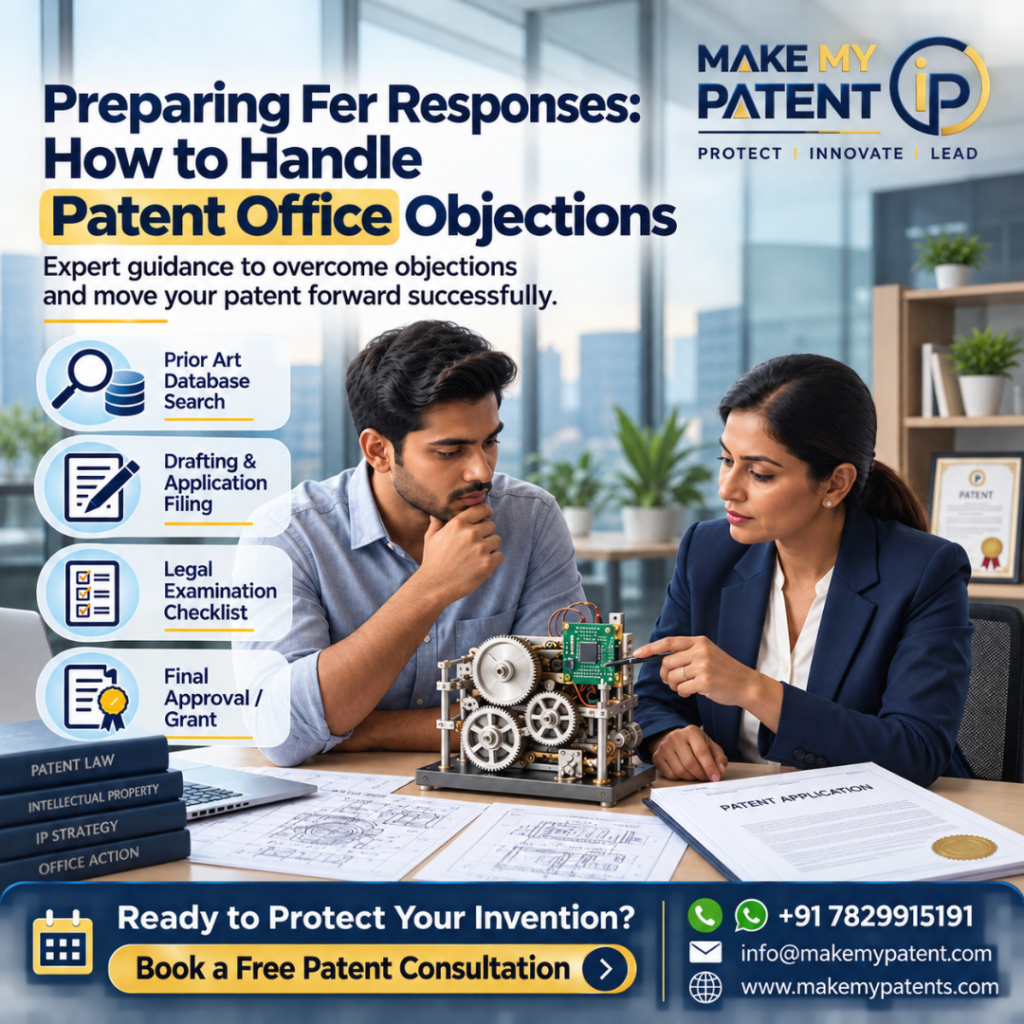
Getting a First Examination Report (FER) from the Indian Patent Office is an important step in the patent application process. Aspirants including inventors, start-ups, researchers and businesses may have queries about FERs including, but not limited to objections, what kind of documents are needed and the next steps.
Addressing the objections of the Patent Office during the examination process requires a thorough understanding of the issues and the ability to articulate them in a convincing manner, both, from a technical and legal perspective.
An FER does not indicate an applicant’s inability to get their invention patented. It indicates areas in the application that require attention and address objections pertaining to patentability under the law. The most appropriate response to the objections raised by the patent office would depend upon a variety of factors including, but not limited to, the patent application, the findings of the examiner and the nature and scope of the invention.
While in Bangalore and other parts of India, innovators can find professional assistance to make this process more structured and organized, MakeMyPatent provides expert patent drafting and responses to FERs and Hearings services backed by over two decades of patent experience.
What Is a First Examination Report (FER)?
A First Examination Report is issued by the Indian Patent Office on examination of a patent application. The report identifies the objections or other requirements, if any, that the applicant may need to address before the application can proceed towards grant.
Sufficiency of Disclosure:
The examiner may have a view that the specification lacks one or more of the essential elements of a complete disclosure of an invention, in which case, the specification may need to be corrected or supplemented.
Patentability:
The examiner may have a view that the invention is not patentable, in which case, an amendment to the specification or claims may be warranted.
Formality:
The examiner may have a view that there are deficiencies with respect to the requirements of procedure or documentation. These deficiencies should be removed.
Why Is An FER Response Important?
An FER response gives the applicant an opportunity to address the examiner’s concerns through reasoned explanations, supporting references, and claim amendments.
What Is The Importance of an Effective FER Response?
An effective FER response explains why a particular objection should be resolved in light of the claims and the original disclosure. It may also reference prior art.
Objectives of an Effective FER Response
An effective FER response does the following:
– Helps to overcome objections and provide relevant information.
– Answers technical objections and describes the differences between the invention and cited prior art.
– Answers legal objections and describes the differences between the invention and the prior art.
Who Needs FER Response Support?
– Start ups and Founders: Protecting core technology.
– Inventors and Innovators: Technical differences with respect to prior art.
– Researchers: Specialized scientific and engineering prior art.
– MSMEs and Enterprises: Managing patent portfolios and prosecute deadlines.
– International Clients: Aligning Indian patent prosecution with other IP protection plans.
For businesses in Bangalore and across India, timely FER management can be critical for patent-protected investments, licenses and technology transfers, as well as commercial expansion.
Step-by-Step Guide to Preparing a Response to a FER
Step 1: Analyze the Patent Examination Report
Examine the FER, application as filed, complete specification, claims, and the documents relied upon by the examiner.
Identify the objections and distinguish addressed issues from unaddressed issues. The claims that are limited and deadlines and/or directions, if any, in the Patent Office communication should be noted.
Step 2: Classify and Analyze the Objections
Classify objections as novelty, inventive step, claim clarity, sufficiency of disclosure, excluded subject matter, and procedural irregularities.
Each objection would require a different response. For example, a response to a novelty objection would require a detailed comparison with the prior art relied upon by the examiner. On the other hand, an objection to insufficiency of disclosure would require an analysis of the extent of disclosure.
Step 3: Analyze Prior Art
Where objections have been made based on one or more of the competitor’s patents or technical publications, analyze the claimed invention in the light of the objections and compare the technical features of the prior art.
Consider whether the examiner’s objection to inventive step is correct in the light of the prior art.
Do an additional patentability search where you believe the competitor’s patent or technical publication requires further analysis.
Step 4: Prepare a Point-by-Point FER Response
A strong FER response to India addresses each objection separately.
For each objection, find the examiner’s concern, relevant claim/specification, and legal/technical argument, and respond appropriately. Where necessary, refer to the documents. Do not make statements about the invention’s uniqueness without support.
The response must be in line with the original application and any other request already made.
Step 5: Consider Claim Amendments Where Appropriate
Certain objections may be answered by permissible claim amendments which define the claims or distinguish the invention from the prior art.
However, such amendments must conform with the Indian Patent Law, and must not include impermissible new subject matter.
Consider the objection, whether the amendment is supported, and how the amendment impacts the protection sought.
Step 6: Prepare Supporting Documents and Submit the Response
Supporting documents may include amended claims, claims with mark-up, or other documents needed as per the procedure.
Check the entire submission for any inconsistency or inadvertent violation of the current requirements of the Patent Office, and then file the request.
Retain the filed documents for future use.
Step 7: Prepare for Further Examination or a Hearing
An FER response does not ensure the end of the examination. The examiner may accept all or part of the response, maintain some objections, and/or require additional action.
When a hearing is scheduled, you will need to be able to explain the technical aspect of your invention, respond to the prior art cited in the Office Actions and explain the rationale behind any requested amendments.
While patent applications are pending, it is a good idea to continue monitoring the communications and deadlines throughout prosecution.
Common Mistakes When Preparing an FER Response
When responding to patent office objection in India, there are mistakes that are frequently made, such as:
– Providing generic answers to address objections
– Ignoring prior art cited by the patent examiner
– Making technical arguments without backing up the statements
– Amending claims beyond the disclosed scope
– Needlessly narrowing claims without assessing the consequences
– Overlooking the formalities or supporting documents
– Missing the deadlines to file the response
– Some mistakes can be eliminated by proper management and review of deadlines.
Benefits of Seeking Professional Help for FER Response
Preparing a FER response requires an understanding of the intricacies of the patent law and procedure. The procedures for interpreting objections and cited references and drafting reasoned arguments are also equally critical. Professional help in this regard can be of great benefit to the applicant.
Entrepreneurs in Bangalore need support to strategically integrate their patent prosecution efforts with their product development, licensing, financing, and IP strategy.
Complex inventions, multiple objections, and relevant commercial claim scope require a detailed review.
Why MakeMyPatent?
MakeMyPatent is a team of patent professionals with 21+ years of experience providing intellectual property services for inventors, startups, researchers, MSMEs, and large corporations. The team is engaged in providing a range of intellectual property services, including patent drafting and filing, patent searches, responding to patent office objections, trademark and copyright protection, IP legal services and international patent filing.
When needed, MakeMyPatent can integrate confidentiality, strategy, and expert advice with AI in their services to help clients understand the examination issues and assess the available options.
Whether you need help responding to a first office action or need help developing an integrated strategy to manage a patent portfolio, MakeMyPatent can assist you.
Frequently Asked Questions
1. What is an FER in Indian patent law?
An FER, or First Examination Report, is issued after examination of a patent application. It identifies objections or requirements that may need to be addressed before the application can proceed towards grant.
2. How should I prepare an FER response in India?
Review the report, analyze each objection, examine cited prior art, and prepare a point-by-point response. Where appropriate, consider permissible claim amendments and verify all applicable procedural requirements before filing.
3. Does receiving an FER mean my patent application has been rejected?
No. An FER is not, by itself, a final rejection. It identifies issues raised during examination. The applicant can respond within the applicable procedural framework, but the outcome depends on the application and the issues raised.
4. Can I amend my patent claims while responding to an FER?
Amendments may be possible, subject to applicable legal and procedural requirements. They must not introduce impermissible new subject matter, and their effect on the scope of protection should be carefully evaluated.
5. Should I hire a patent professional for an FER response?
A patent professional can help analyze objections, review prior art, prepare technical and legal arguments, and assess claim amendments. Professional support can be particularly valuable for complex inventions or applications involving multiple objections.
Book a Patent & IP Strategy Consultation with MakeMyPatent.
Ready to protect your innovation? Book a free consultation with MakeMyPatent for expert patent filing, patent drafting, patentability search, and IP protection support.
You can also request a free patent strategy session, explore our services, or WhatsApp us to discuss your invention and filing objectives.
- Website: https://makemypatents.com/
- Call Us : +91 7829915191
- Email Us: info@makemypatent.com
Disclaimer: This blog provides general educational information only and does not serve as formal legal counsel. Please address your specific invention or IP requirements directly with a registered patent professional.